The Ocean of Gypsum
Walking barefoot across the remnants of an ancient sea.
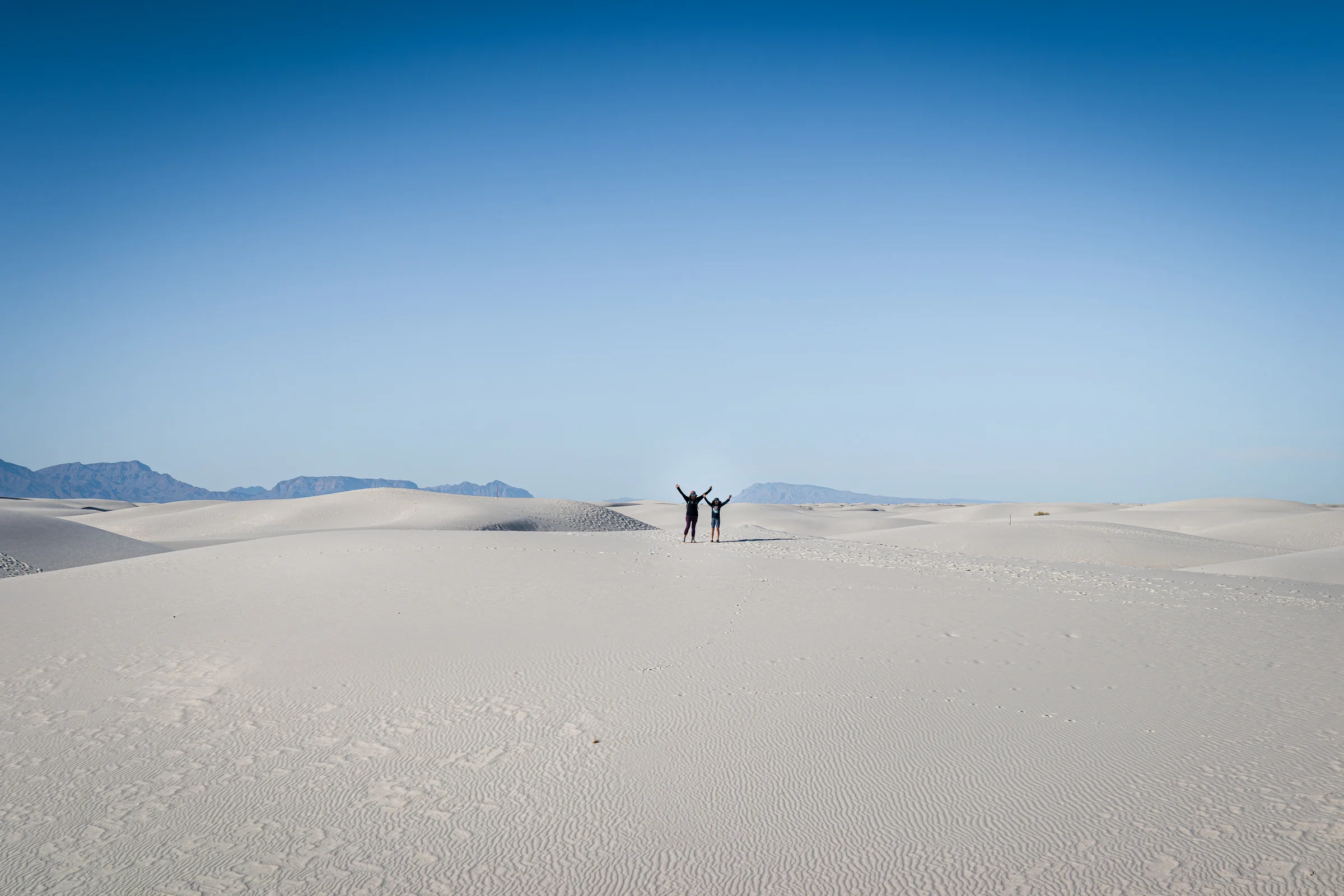
The ground here doesn’t behave like sand. Even under the glare of the high desert sun, the brilliant white dunes remain completely cool to the touch. It isn’t typical silica; it’s pulverized gypsum, the remnants of an evaporated Ice Age lakebed continuously broken down and scattered by the wind.
Stepping away from the road and into the heart of the dunefield strips away all normal sense of distance. There are no carved paths out here, only an undulating expanse of white that stretches across the Tularosa Basin for nearly three hundred square miles. Without distinct landmarks to anchor the eye, the horizon blurs. It feels less like an arid desert and more like walking across a frozen, snow-covered landscape that simply refuses to melt.
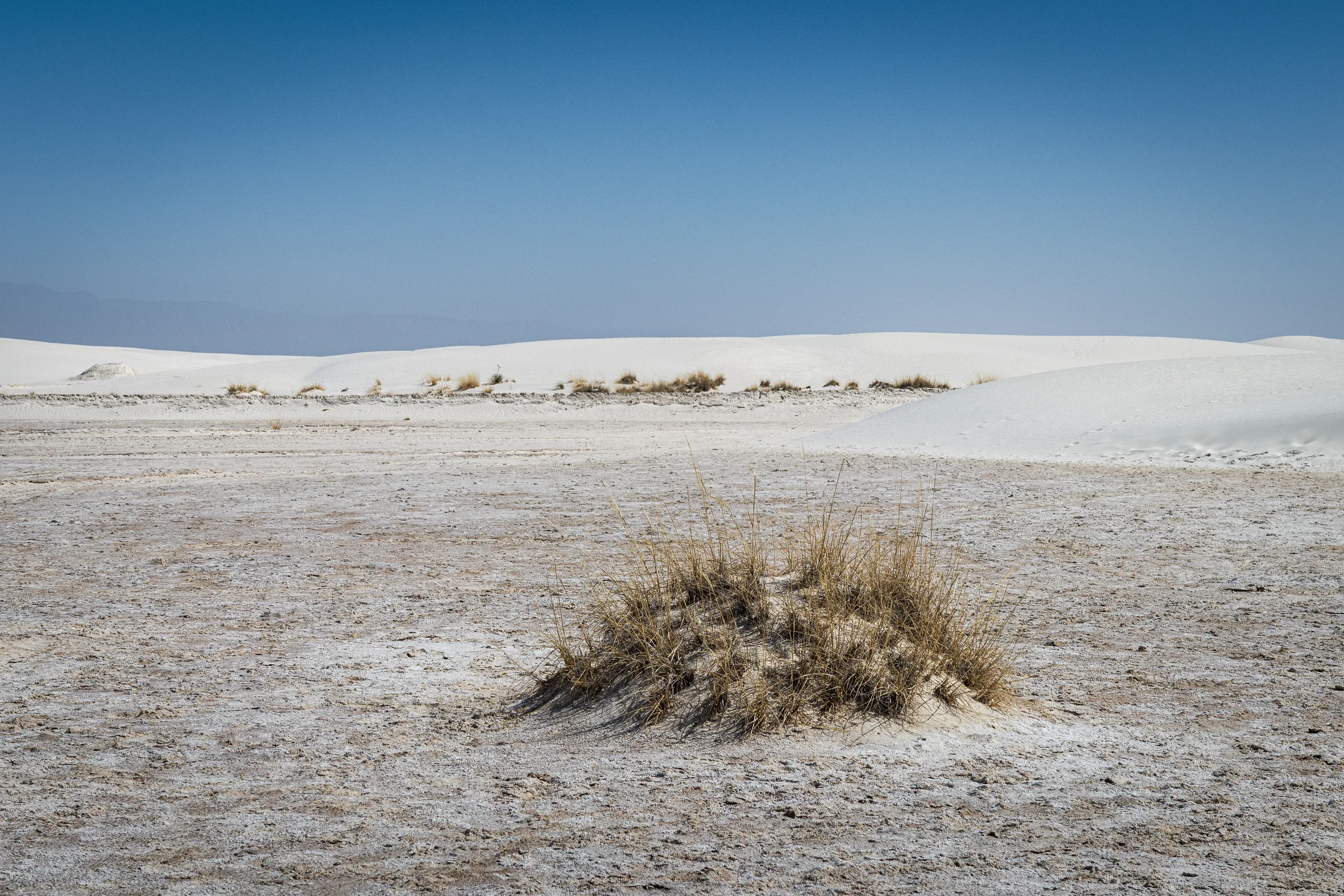
Beneath the surface, the entire system is held together by water. A shallow water table sits just a few feet down, keeping the interior of the dunes damp and anchoring the massive drifts so they don’t blow completely away. Along the margins of the field, stubborn soaptree yuccas stretch their root systems deep to tap into this moisture, their stalks rising out of the shifting slopes like solitary monuments.
When the afternoon breeze picks up, it actively reshapes the basin. It erases footprints within minutes, carving perfect, unbroken ripples across the slip faces of the dunes. As the sun drops, the blinding white expanse absorbs the changing light, cooling into soft hues of lavender and deep blue, leaving behind an absolute, heavy quiet across the basin.
Gallery
Join the conversation
Have thoughts or reactions to share? Join the conversation on Bluesky.