The Edge of the Lowcountry
Settling into the slow, humid rhythm of the Atlantic coast.
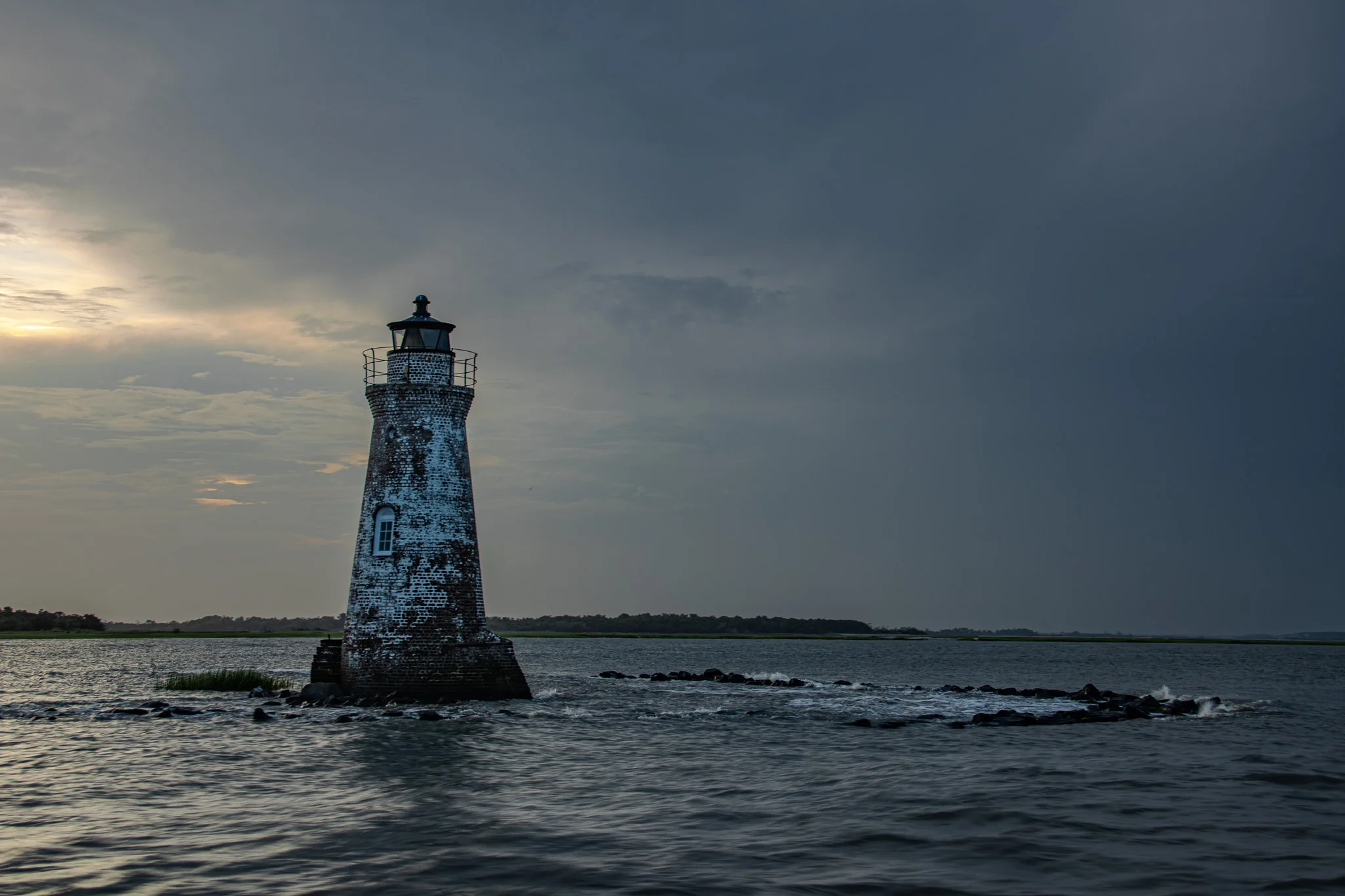
The June air on the Georgia coast wears a heavy, undeniable humidity. It wraps around you the moment you step onto the wooden boardwalk crossing the dunes, carrying the sharp, brine-soaked scent of the Atlantic mixed with the earthy tang of the nearby salt marshes. There is no rushing here; the thick summer atmosphere forces everything into a slow, deliberate rhythm.
The shoreline stretches out wide and flat, reshaped twice a day by sweeping tidal shifts. When the water pulls back, it leaves behind an expansive mirror of wet, packed sand scattered with tide pools and fragments of oyster shells. Oliver chases the receding surf, tracking the erratic, sideways scuttling of ghost crabs before they vanish into their burrows. Out here, the ocean dictates the schedule—a constant, rhythmic churn that effortlessly washes away the rigid timelines of the mainland.
Just inland from the breakers, the environment shifts from blinding exposure to deep, shaded sanctuary. The island is anchored by ancient live oaks, their massive, sprawling branches heavily draped in Spanish moss that sways idly in the coastal breeze. Walking beneath them, the blinding glare off the water gives way to dense greens and deep grays. The trees feel permanent and immovable, rooted deeply in the dark, nutrient-rich pluff mud of the estuaries.
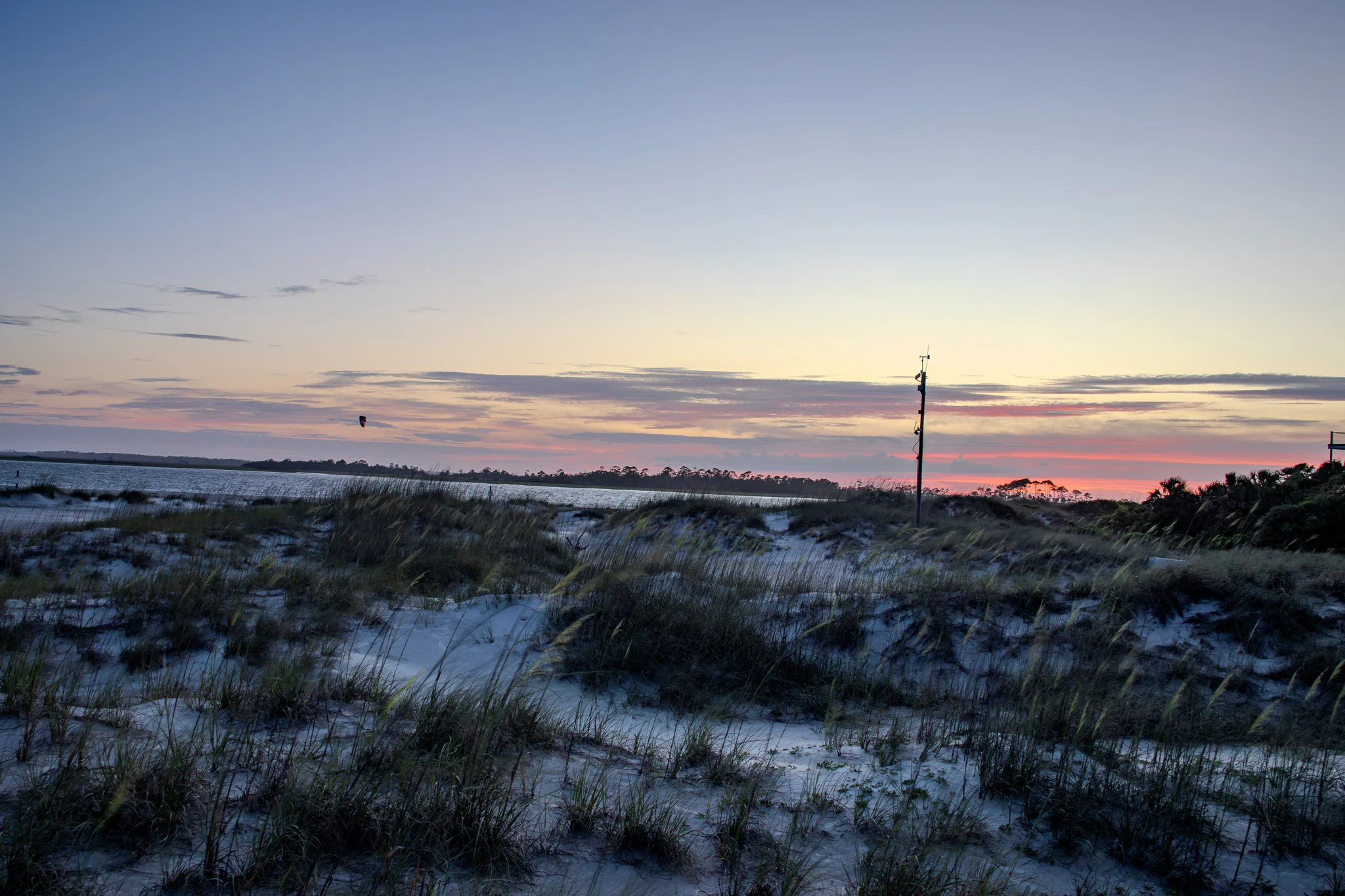
Sitting on the beach as the late afternoon light softens the horizon, the appeal of the Lowcountry becomes obvious. It isn’t an environment that demands to be challenged or overcome. It is a place that simply asks you to let the tide roll out, listen to the wind rattle through the palmettos, and sit quietly in the enduring warmth of the coast.
Gallery
Join the conversation
Have thoughts or reactions to share? Join the conversation on Bluesky.