Iron and Ice in the Gorge
Finding quiet under the steel and snow of West Virginia.
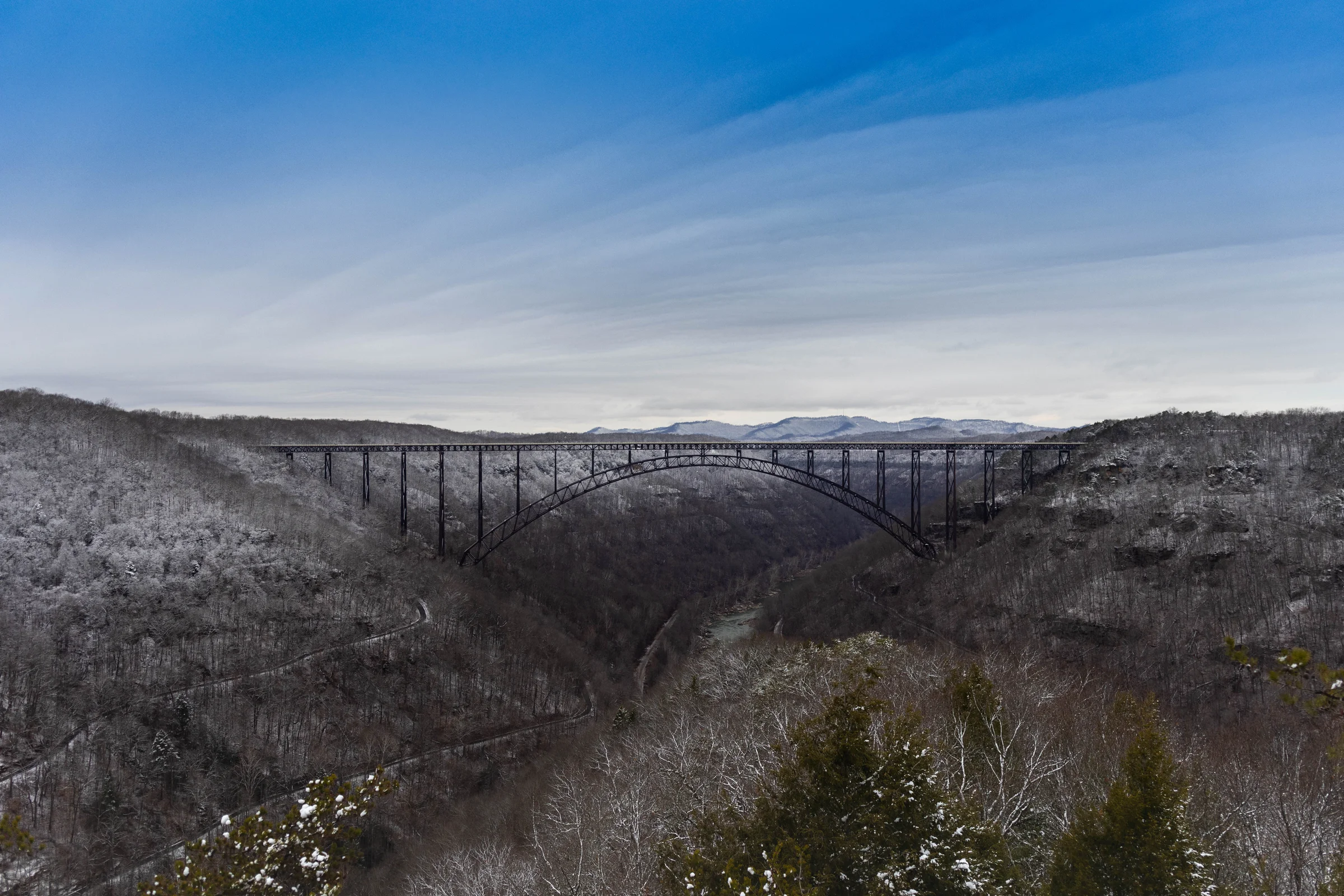
The cold air in the gorge carries the sharp, unmistakable scent of damp pine needles and wet stone. A fresh layer of January snow silences the usual crunch of the forest floor at Babcock State Park, dampening everything except the steady, rushing sound of Glade Creek spilling over the rocks.
Ice builds up along the timber framing of the old grist mill, freezing the spray from the creek into thick, crystalline stalactites. The water here moves with a dark, heavy momentum through the snow-banked creek bed, cutting a jagged black line through the pristine white landscape. It’s an intimate, enclosed winter setting, defined by the slow creep of frost and the rhythmic churn of the water.
A short drive away, that intimacy vanishes, replaced by massive, sheer drops. The New River—ironically one of the oldest rivers on the continent—has spent millions of years carving a deep, sandstone canyon through the Appalachian plateau. Walking directly under the New River Gorge Bridge completely upends your sense of scale.
Thousands of tons of weathering Cor-Ten steel form a massive arch overhead, vibrating slightly with the invisible hum of traffic driving hundreds of feet above the river. Suspended beneath the roadway on the catwalk, surrounded by an intricate web of rusted metal, you feel entirely untethered from the ground. Winter drafts push through the steel beams, carrying the distant, roaring echo of the rapids far below. It’s a striking contrast: the ancient, slow-carved geology of the gorge met by a soaring feat of industrial engineering, both locked together in the freezing January air.
Gallery
Join the conversation
Have thoughts or reactions to share? Join the conversation on Bluesky.