Sand in the Alpine
Finding a desert at the base of the Rocky Mountains.
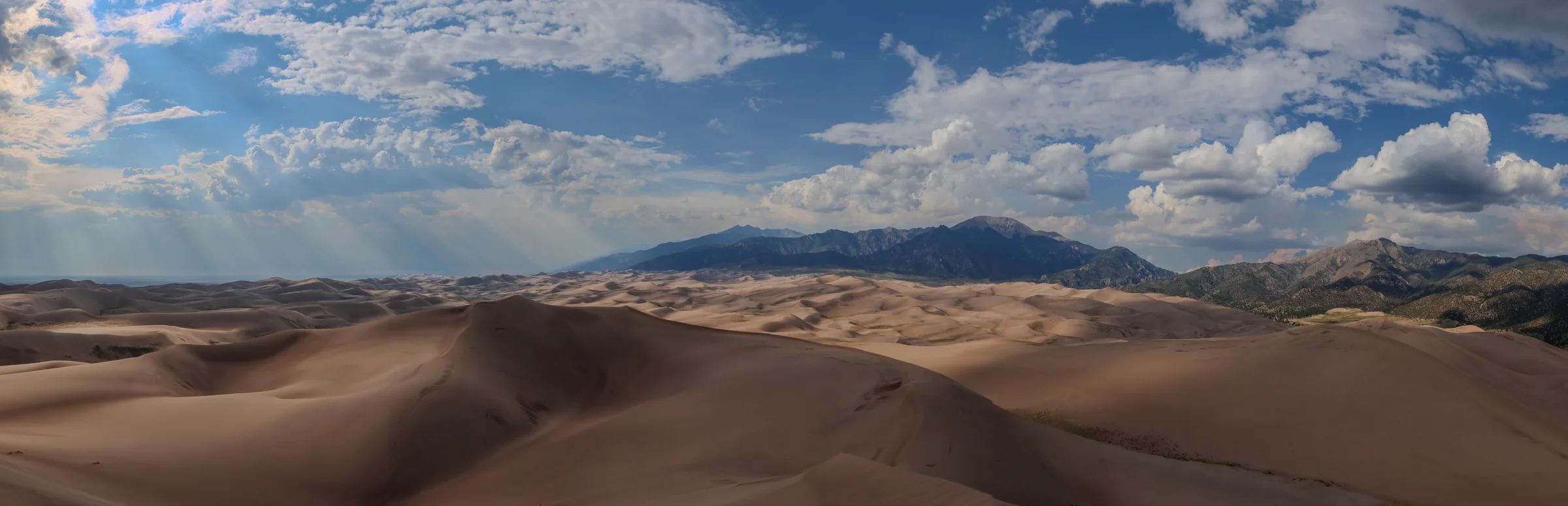
- ✦ Sangre de Cristo Mountains
- ✦ San Juan Mountains
- ✦ Star Dune
The wind moving across the San Luis Valley carries the distinct, abrasive sting of a desert, but the air itself is alpine-cold. Standing at the base of the Great Sand Dunes, the environment feels entirely out of place. It isn’t just that the dunes are massive—the tallest in North America—it’s that they are immediately backed by the dark, jagged peaks of the Sangre de Cristo Mountains, which still hold pockets of snow in the middle of summer.
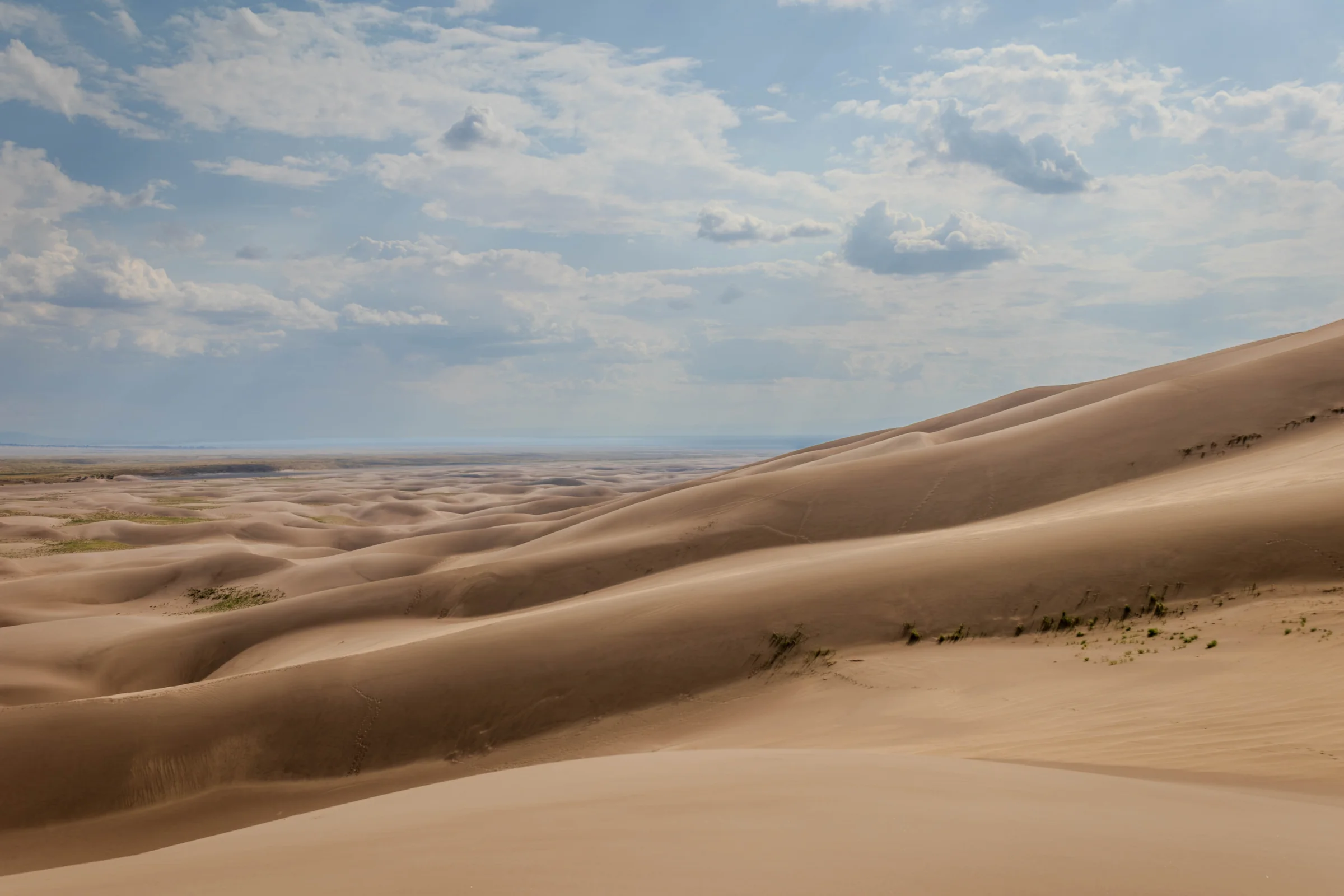
Walking onto the dunes strips away any sense of a clear path. The surface of the sand is loose and constantly shifting underfoot, sculpted into perfect, wind-rippled ridges that change direction by the hour. Medano Creek runs shallow and wide at the base of the field, an icy, snowmelt-fed stream flowing directly into what appears to be a vast, Saharan landscape. The water pulses in rhythmic surges across the sand, a strange, freezing contrast to the heat radiating off the dunes by mid-afternoon.
As you move deeper into the dunefield, the scale of the valley distorts. The sheer volume of sand—pulverized rock carried by ancient lakes and trapped by the mountain range over thousands of years—swallows the sound of the wind. There are no trees to gauge distance, only the stark contrast of the pale, undulating sand against the dark timberline of the mountains rising thousands of feet above.
Late in the day, the stark lighting throws the peaks and valleys of the dunes into sharp relief, casting deep shadows across the slip faces. It is a landscape defined entirely by contradiction: an isolated, creeping desert locked permanently against the frozen spine of the Rockies.
Gallery
Join the conversation
Have thoughts or reactions to share? Join the conversation on Bluesky.