Rusted Steel and Solid Quartz
Two-hundred-million-year-old pine trees that look like fresh timber but carry the heavy, unyielding weight of solid stone.
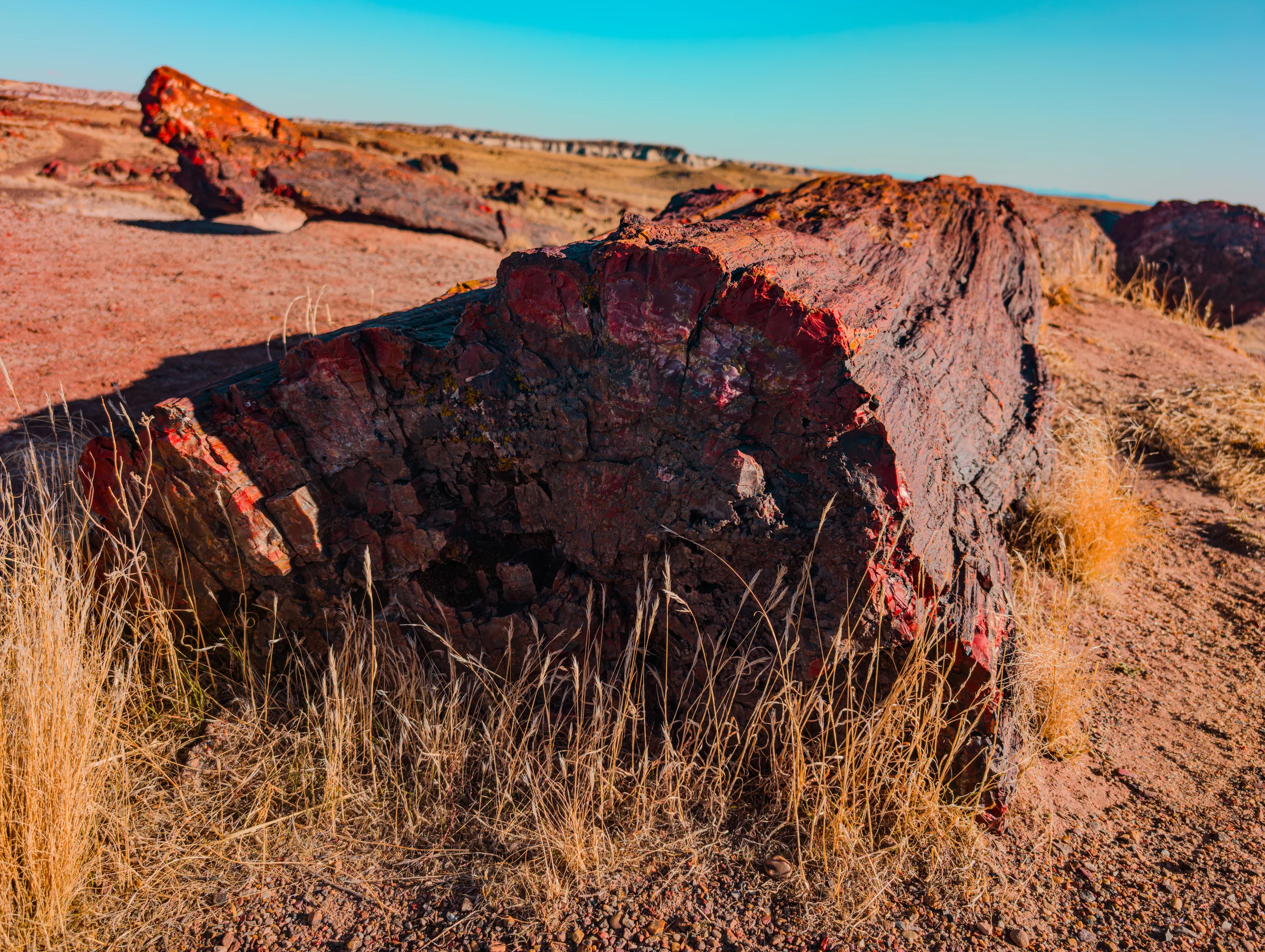
A driving tour through the painted Arizona badlands involves bracing against a freezing March wind to see two-hundred-million-year-old pine trees that look like fresh timber yet carry the heavy, unyielding weight of solid stone.
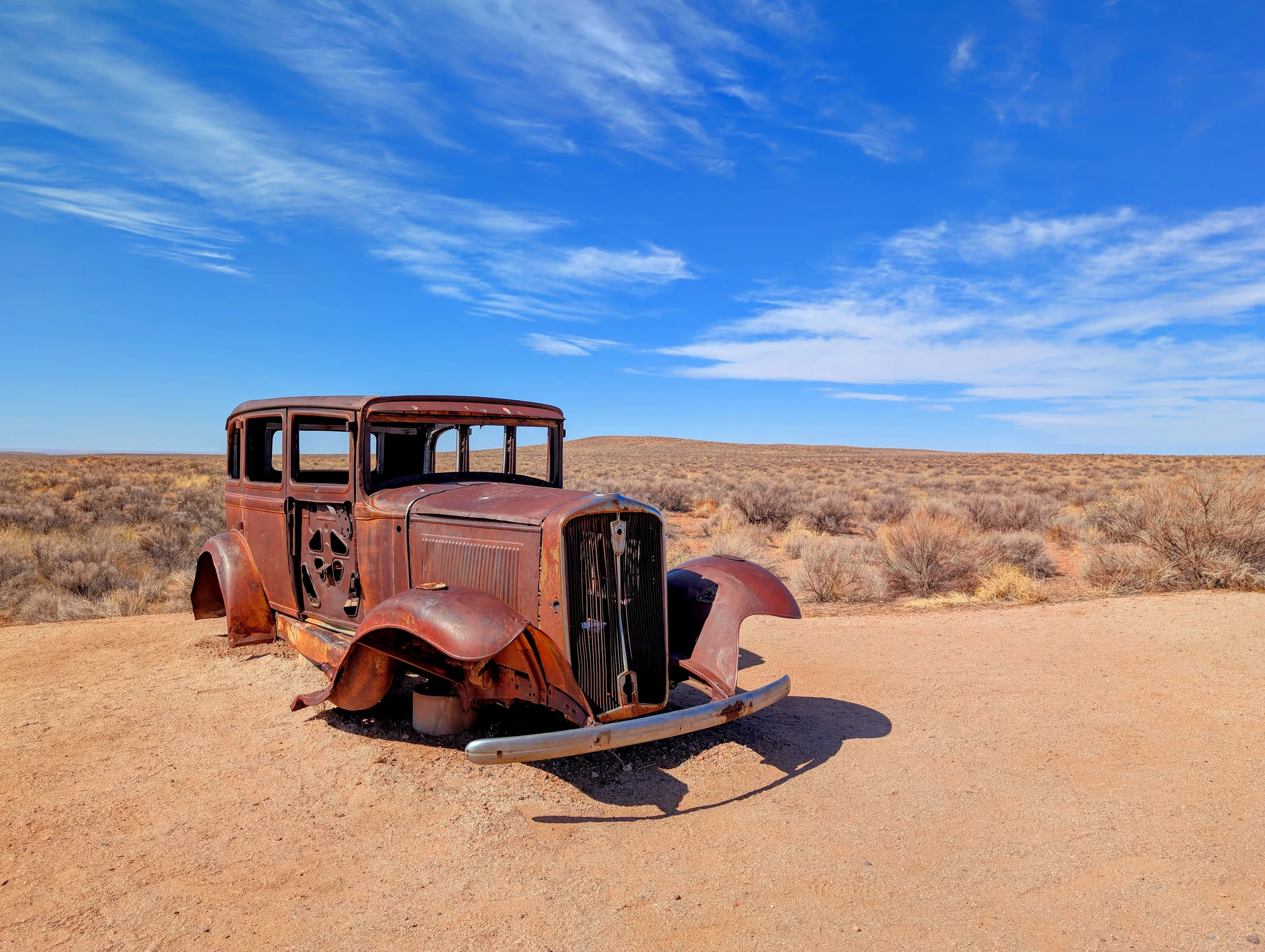
An old, rusted-out sedan sits off the shoulder, slowly freezing in a relentless March crosswind. It marks the original alignment of Route 66. The frame looks ancient. But out here, a ninety-year-old piece of steel is basically a fresh arrival.
The paved road cuts a clean line through the painted badlands, routing past hills of white, gray, and deep red clay. Two hundred million years ago, a river system washed a forest of conifers into a floodplain, buried them in volcanic ash, and slowly swapped their organic cells for heavy, brilliant minerals. The logs scattered in the dry grass look exactly like felled timber, right down to the fractured, splintered bark. But if you try to kick one, you will immediately break a toe on solid quartz.
Earning a close look at the scattered rock requires stepping out of the car and into an absolute wind tunnel. March in northern Arizona drops the temperature and blasts a constant, grit-in-your-teeth headwind across the flat plains. No trees. No windbreaks. Just miles of cracked earth and exposed geology.
We spent the afternoon zipped up to our chins, wandering through the fossilized debris to take in the sheer volume of deep time lying directly in the dirt. Eventually, the wind chill won out over the scenery.
Gallery
Join the conversation
Have thoughts or reactions to share? Join the conversation on Bluesky.