Ignited Stone
Wandering through the blazing Aztec sandstone and ancient histories of the Mojave.
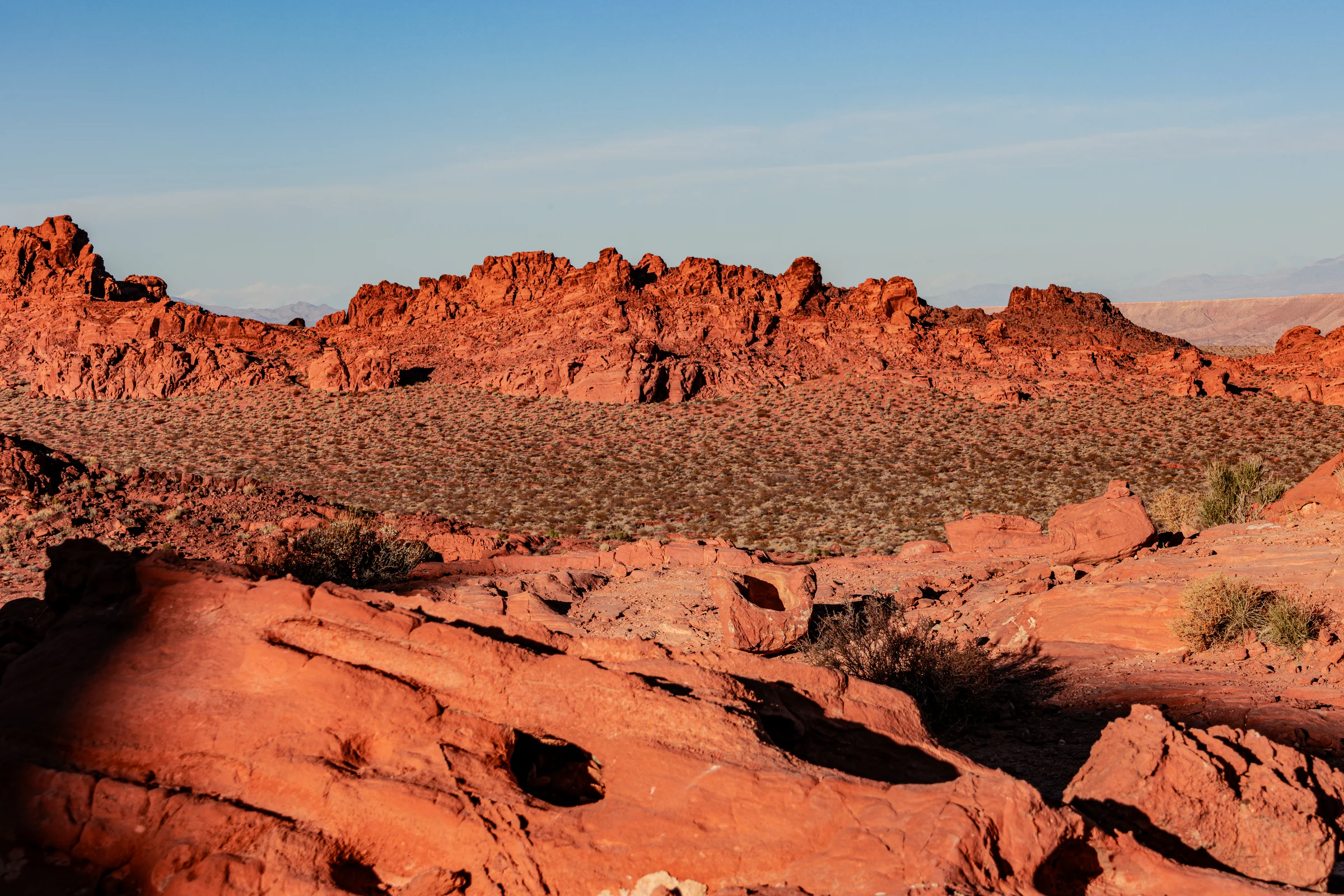
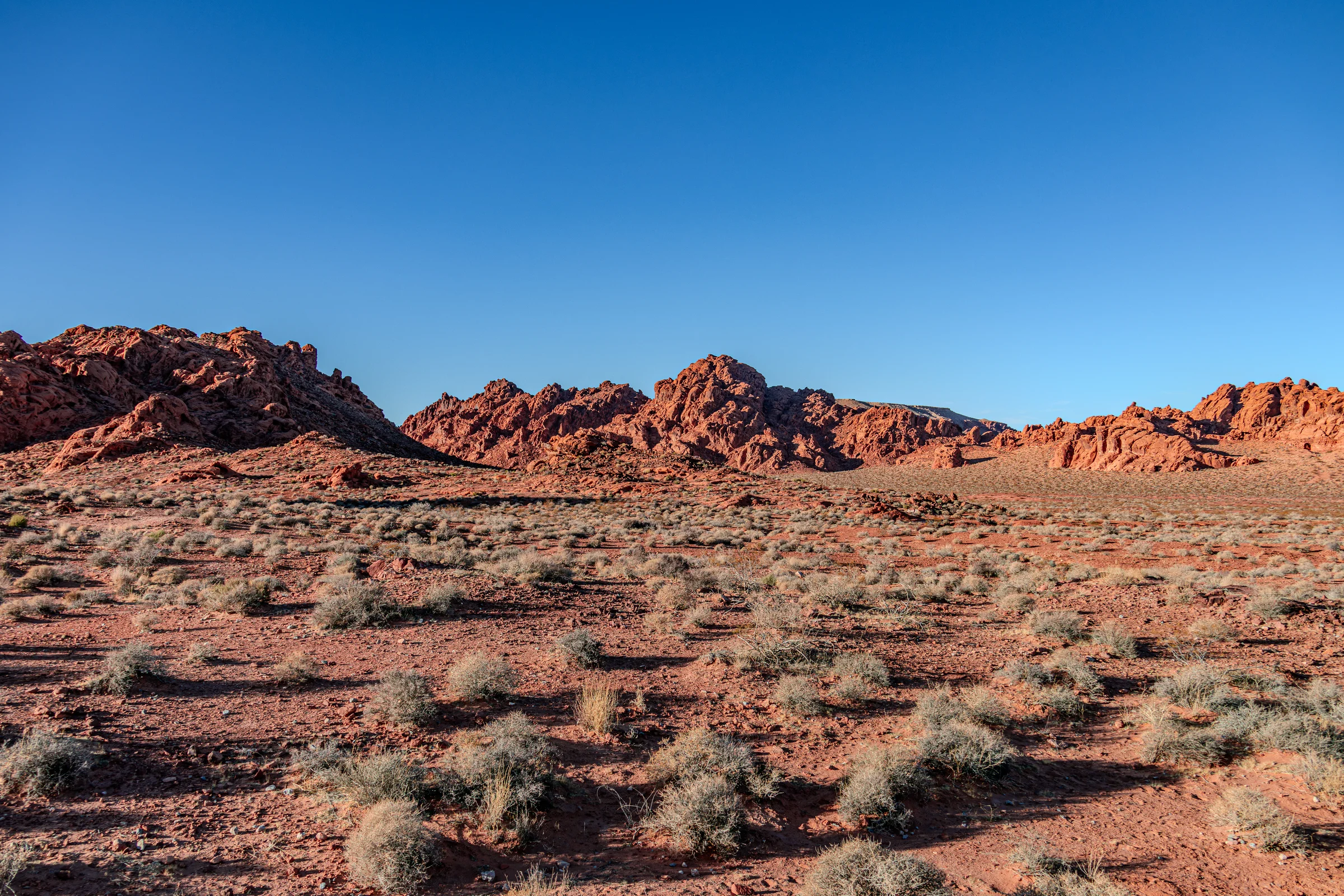
The air in this pocket of the Mojave desert doesn’t just feel hot; it feels heavy with the radiation of the sun striking thousands of acres of exposed, scarlet rock. The transition is abrupt: one moment you’re traveling through the endless, muted gray and tan of flat desert scrub, and the next, you’re enveloped by a labyrinth of blazing red Aztec sandstone. The naming here isn’t figurative—when the high desert sun hits the jagged, iron-rich cliffs, they appear to glow from within, radiating an intense, almost unnatural crimson that looks less like geology and more like an open furnace.
A few miles into the basin, the massive rock faces reveal the slow, patient history of this place. Climbing the steel stairs at Atlatl Rock puts you face-to-face with the ancient past, where the dark, metallic sheen of desert varnish—a naturally occurring coating of manganese and iron oxides—serves as a canvas for hundreds of prehistoric petroglyphs. Tracing the hand-carved outlines of spear-throwers (atlatls), bighorn sheep, and abstract symbols etched into the stone by people who lived here thousands of years ago feels remarkably intimate. It is a grounding reminder of human endurance in a landscape that can otherwise feel completely inhospitable.
Deeper into the park, the landscape sheds its jagged edges for a fluid, undulating geometry. At the Fire Wave, the sandstone loses its uniform red and erupts in swirling, zebra-striped bands of pink, orange, and pale white. Walking across these massive, wave-like mounds is like stepping onto a frozen, churning sea of sand, where ancient Jurassic dunes were compressed, tilted, and then patiently shaved down by the wind to expose the swirling cross-bedding underneath. Your boots tread over fine, loose sand, then grip the gritty, warm curves of the stone. It is a place of endless, dizzying patterns that effortlessly blur your sense of scale and time.
As the afternoon fades, the intensity of the colors shifts. The shadows crawl deep into the slot canyons, natural arches, and the bizarre, weathering Elephant Rock guarding the eastern edge. The heat slowly starts to lift, but the rock itself remains warm, radiating the day’s intensity back into the cooling desert air. Valley of Fire is not a landscape of comfort, nor is it a trail to conquer. It is a spectacular, blazing monument to patience—a world where the wind has spent eons sculpting the earth into something fleetingly brilliant, then leaving it to glow in the silent expanse of the desert.
Gallery
Join the conversation
Have thoughts or reactions to share? Join the conversation on Bluesky.