Fault Lines and Snowmelt
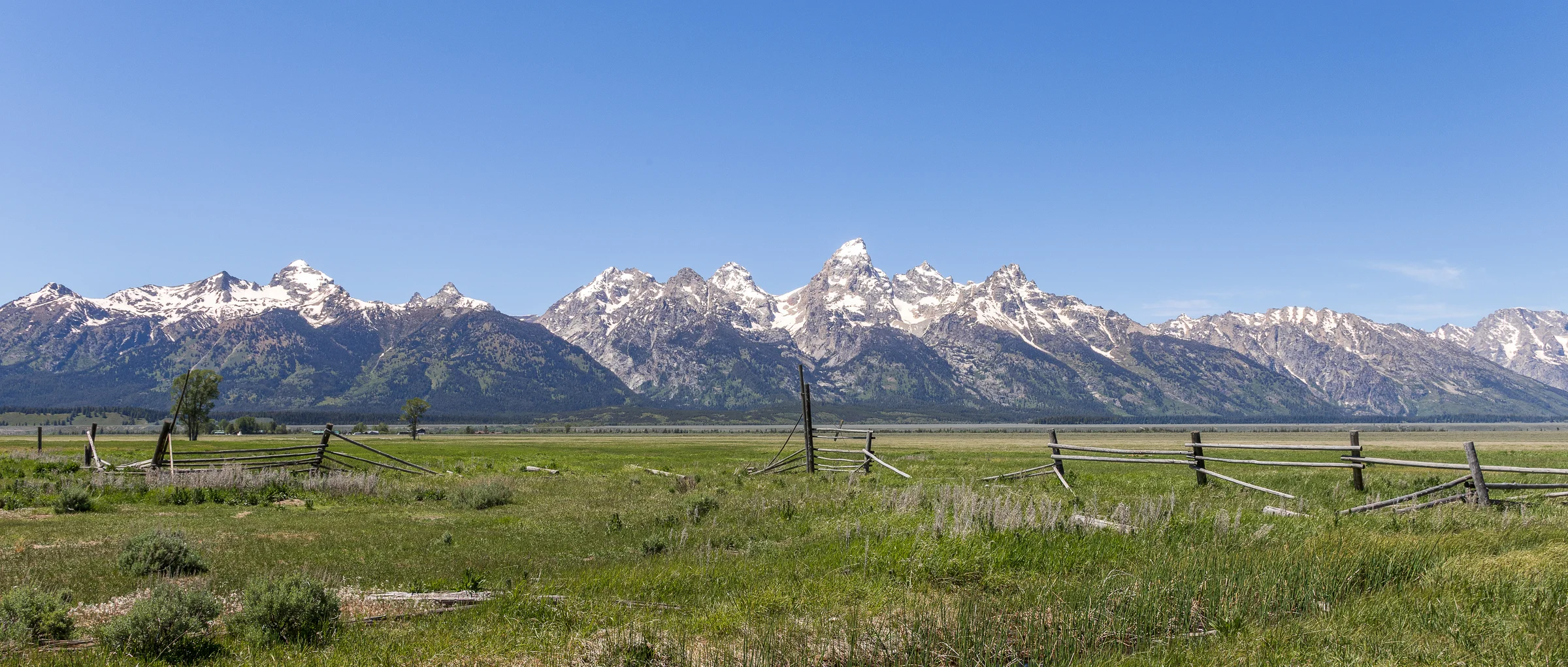
The Teton Range rises straight out of the valley floor.
- ✦ Jenny Lake
- ✦ Inspiration Point
- ✦ Seeing a moose in the wild!
The Teton Range rises straight out of the valley floor, with no foothills to break the transition. The landscape shifts immediately from flat sagebrush and historic homesteads to steep granite. Heavy snowmelt feeds a massive water system, filling clear lakes and supporting dense wildlife in the marshes at the base of the peaks.
Down in the basin, the landscape is open and exposed. Weathered wooden fences and historic log barns sit on the plains directly beneath the mountains. Early homesteaders built right at the base of the peaks, relying on the flat ground and the constant runoff from the high elevations.
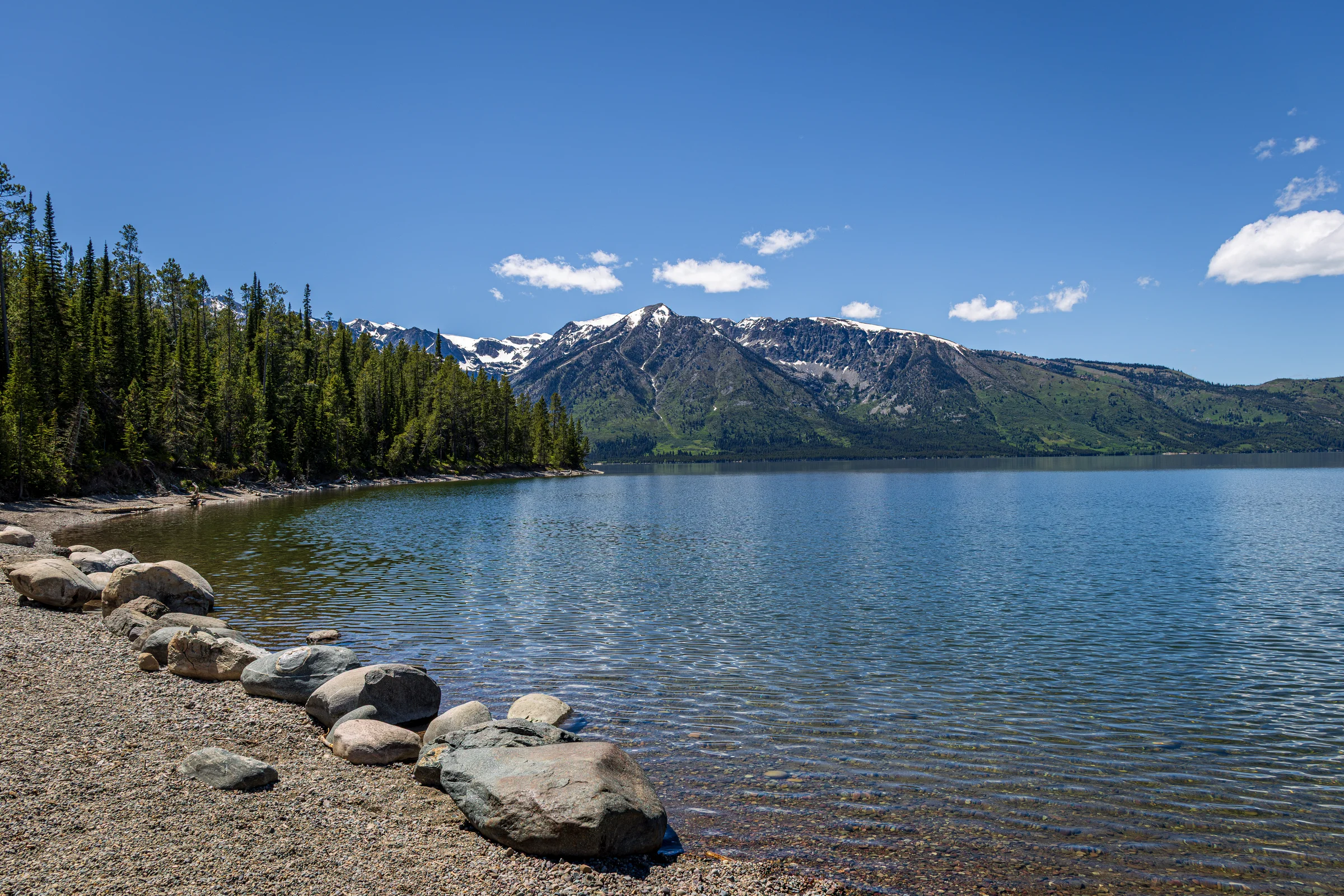
Snowmelt drives the entire environment. The water cuts through the pine forests and drops over steep, rocky waterfalls before gathering in deep lakes. Along the shorelines, the water is clear enough to reveal beds of smooth, colorful river stones.
The wetlands around these lakes provide a reliable food source for the local wildlife. Moose wade into the shallow marsh waters to feed and graze through the thick green brush along the banks.
Moving up from the valley floor requires an immediate, steep climb. Dirt trails cut through heavy pines and route around massive fallen timber. Gaining elevation opens up wide views of the lakes and the flat plains stretching eastward. The high trails offer a clear, unobstructed view of how abruptly the mountains broke through the earth.
Gallery
Join the conversation
Have thoughts or reactions to share? Join the conversation on Bluesky.