Bones of the Boomtown
Watching the Mojave slowly reclaim a broken promise.
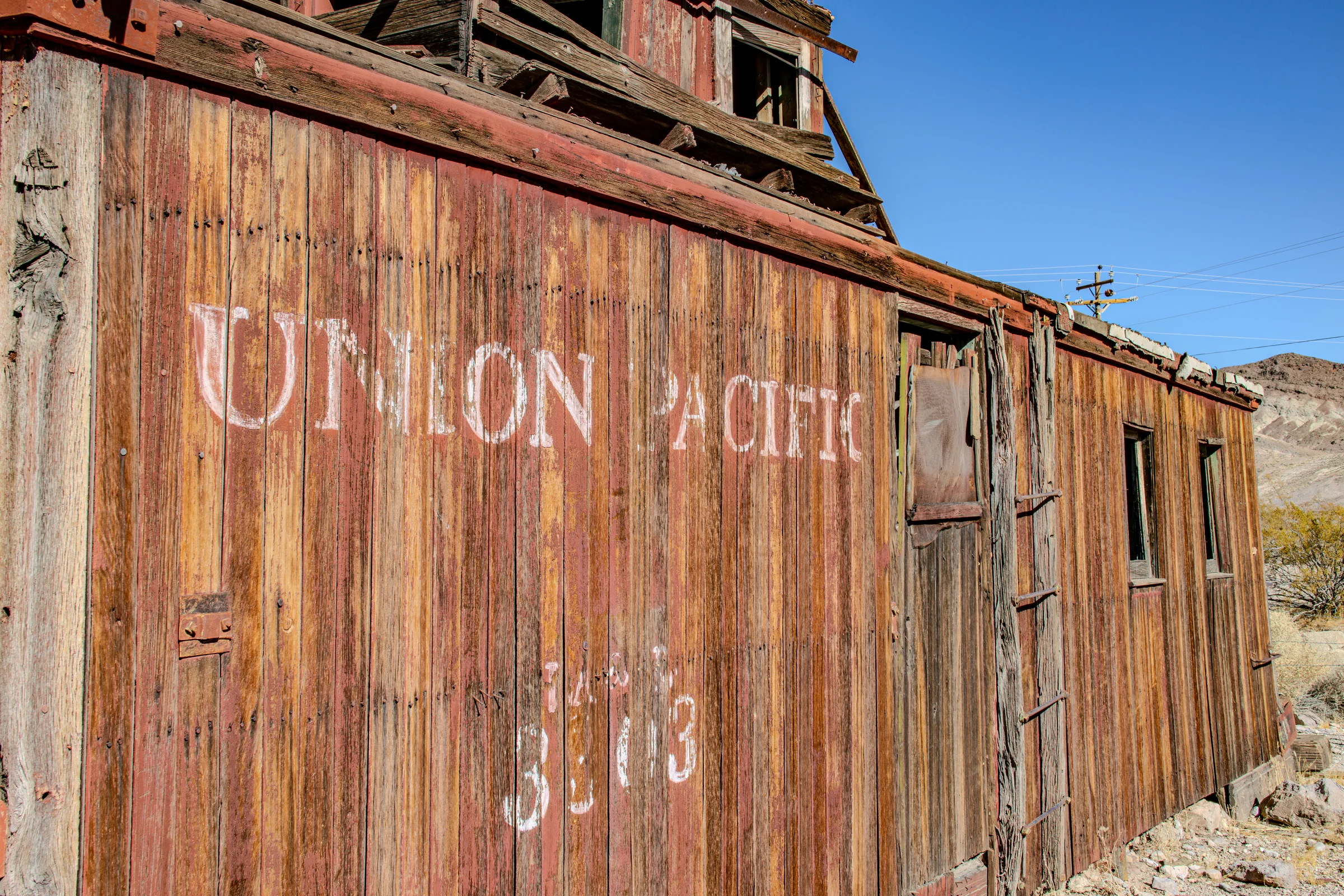
The wind moving through the shell of the Cook Bank building carries the fine, abrasive grit of the Mojave. Out here in the Bullfrog Hills, just outside the eastern edge of Death Valley, the desert sun beats down relentlessly on crumbling concrete and rusted iron. There are no roofs left to offer shade, only the jagged, three-story silhouettes of bank vaults and storefronts standing completely exposed against the pale Nevada sky.
Rhyolite didn’t fade away; it collapsed. In the early 1900s, it was a booming gold town of thousands with an opera house, a stock exchange, and electricity. Barely a decade later, the gold panicked, and the population vanished, leaving behind a sprawling grid of ambitions baked into the scrubland. Walking down what used to be the bustling main thoroughfare, I find the quiet absolute. The town is a landscape defined entirely by absence.
The remaining textures of the ruins tell the story of a place built too quickly from whatever could be found. A few blocks over, a house still stands with walls constructed entirely from thousands of discarded glass liquor and medicine bottles, mortared together with adobe mud. The glass catches the harsh afternoon light, gleaming dull green, amber, and clear amid the muted tones of the desert dirt—a testament to strange ingenuity in a place completely devoid of timber.
As the shadows lengthen across the Amargosa Valley, the skeletal remains of Rhyolite feel less like a tragedy and more like an inevitability. The desert doesn’t actively destroy; it just patiently outlasts. Standing among the foundational footprints, looking out at the barren, rolling hills, one sees the ruins as a quiet reminder of how quickly the earth reclaims what was built upon it.
Gallery
Join the conversation
Have thoughts or reactions to share? Join the conversation on Bluesky.